19 August 2026 · Fusion Wedding · Sikh Wedding · Anand Karaj · Two Videographers · Wotton House · Real Weddings
Two Traditions, One Day: A Sikh & Irish Fusion Wedding at Wotton House
Two ceremonies, two traditions, one day. Avneet and Laurence’s Sikh and Irish fusion wedding at Wotton House in Surrey, and why a second videographer changes the film.
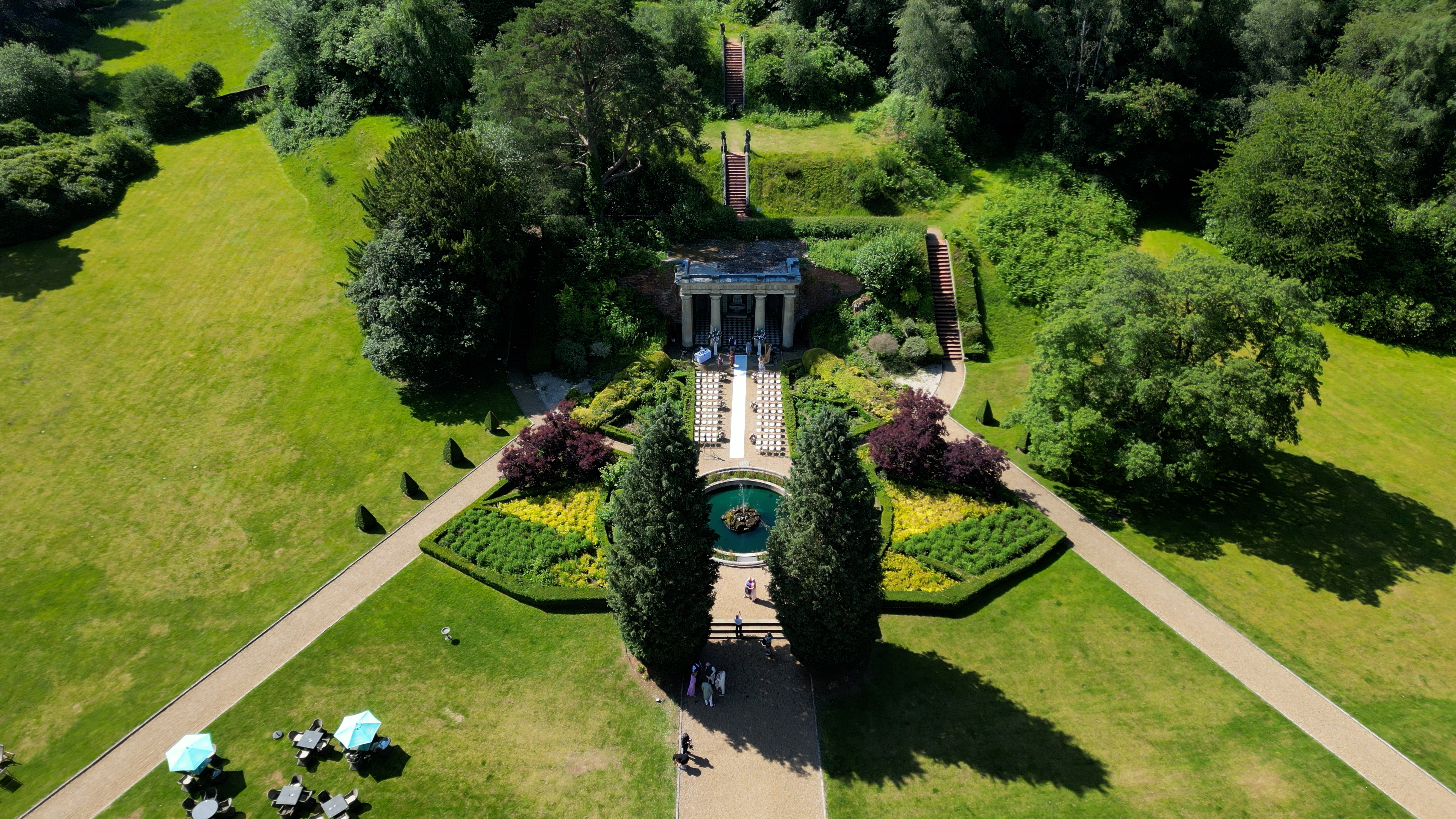
Some wedding days are simple. One space, one ceremony, one thread to follow. A Sikh and Irish fusion wedding is not that kind of day. There are two sets of traditions, more than one space to move through, and two families meeting in the middle. At Wotton House, all of it happened at once.
Every image in this story is a frame from Avneet and Laurence’s wedding film.
The gardens, and a promise set in stone
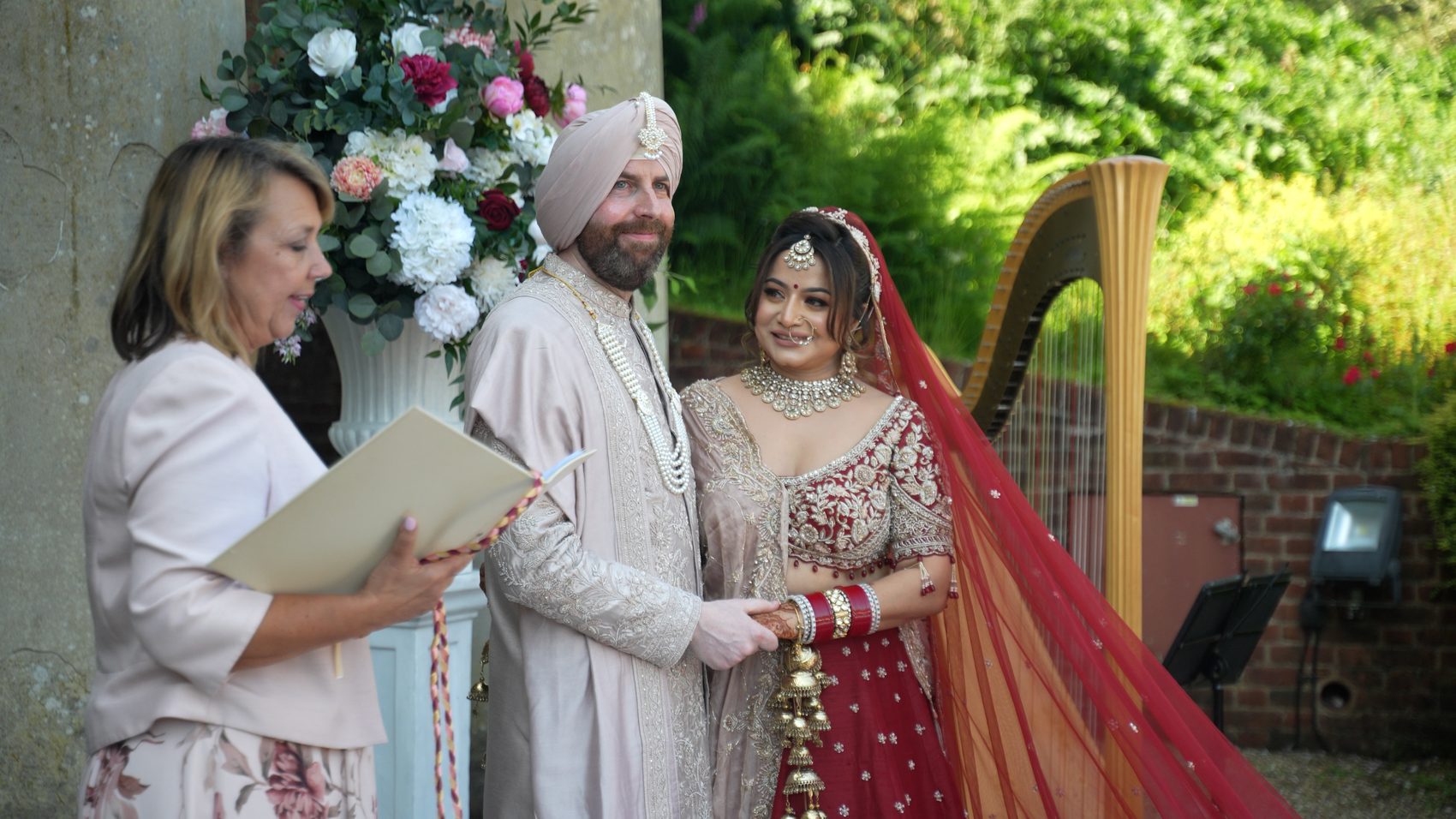
The first ceremony was outside, in the Italian Gardens near the ornamental temple. From there you could look back across the gardens towards the house, so the whole setting felt open and unhurried, the fountain running somewhere behind everyone as they gathered, moved around, chatted, cried, laughed and slowly settled into the day.
That open setting is where the Irish side of the day came in, with the Oathing Stone. A chosen stone is passed quietly from guest to guest. Each person holds it for a moment and silently fills it with their good wishes before passing it on. By the time it reaches the couple it has been through every pair of hands in the gathering, and when they make their vows holding it, the promise is, in the old phrase, set in stone.
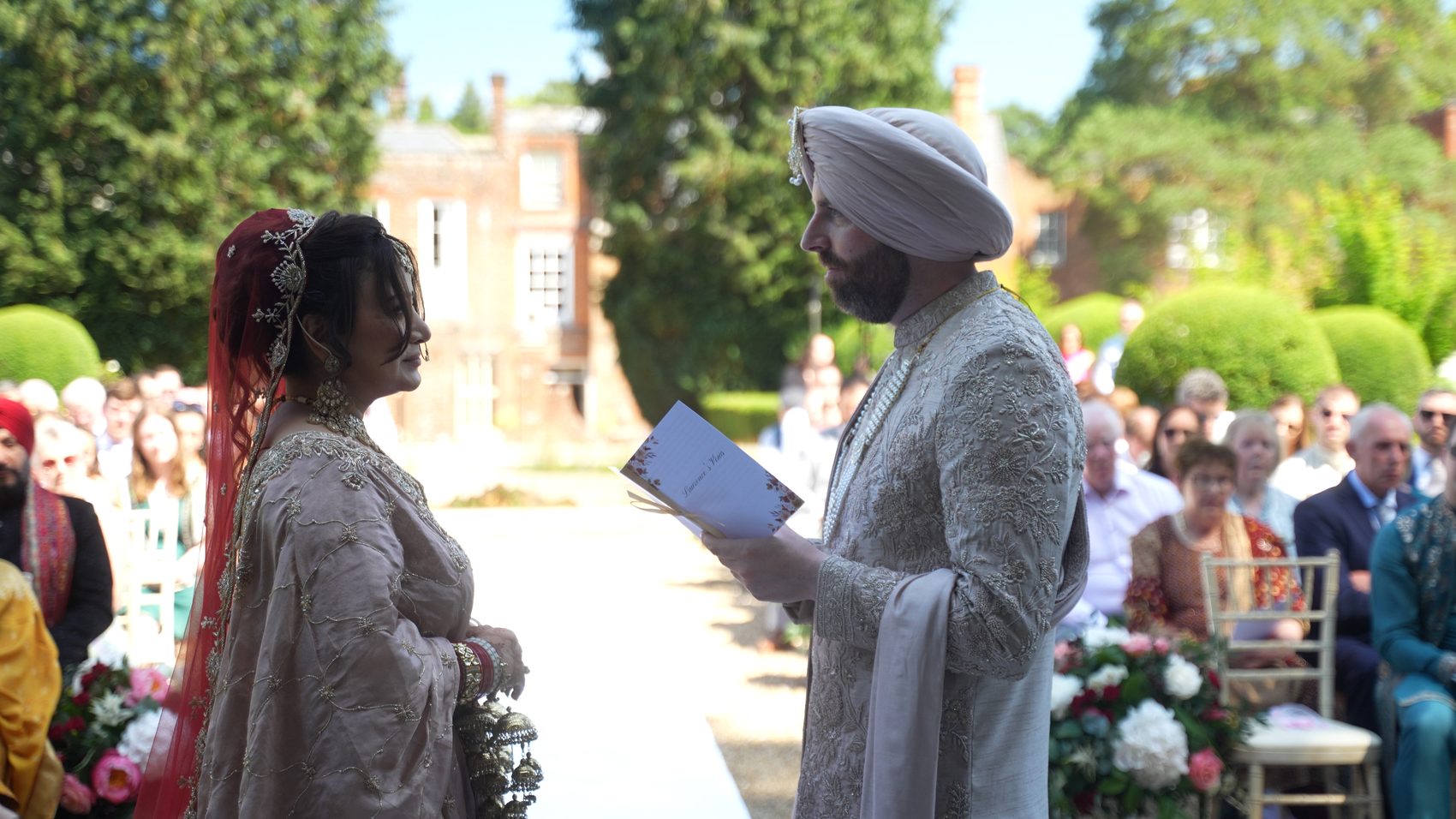
Which means the couple are at the front saying their vows while the stone is still travelling through the guests behind them. The promise and the blessing are happening in two places at the same moment.
The Anand Karaj in the old library bar
Later, everyone moved inside for the Anand Karaj.
The two spaces could not have been more different. Outside there had been light and air and the sound of the fountain. The library bar was warmer and more enclosed, all dark wood and old books with soft light around the couple, and it suited the Anand Karaj completely. Once the ceremony began, the room stopped being a pretty historic backdrop and became part of the day.
The Anand Karaj, meaning the blissful union, is the heart of a Sikh wedding, and it carries its own deep weight. The couple sit before the Guru Granth Sahib, the Sikh holy scripture, which presides over the ceremony as a living presence rather than a backdrop. As the Laavan, the four marriage hymns, are sung, the couple rise and walk slowly around the Guru Granth Sahib for each one. Every round carries its own meaning, moving them through duty, love, restraint and finally union, so the act of walking becomes the vow itself. There is music and singing throughout, the families sit close, watching every circuit, and the room is thick with reverence and feeling all at once.
Like the stone outside, it is something you cannot take in from one spot in the room. The couple are circling the scripture, the musicians are playing, and the families are reacting all around them.
Where a second videographer changes the film
This is where having two wedding videographers actually matters. It isn’t about turning a wedding into a production, and it isn’t that more cameras automatically make something better. It’s simpler than that. On a day like this, one person physically cannot see everything.
Outside, stay close on the couple and you miss the stone moving through the guests. Inside, hold on the couple walking the Laavan and you miss a parent’s face as they watch, or the musicians, or the small reaction rippling through the room. Step back to take in the whole scene and you lose the look or the touch that lasts barely a second.
With two of us, the film has room to tell a richer story. One person stays close to the couple and the ceremony while the other follows everything moving around them, whether that’s the stone going hand to hand outside or the families watching the Laavan inside, the music, the reactions, the way the day shifts from the gardens to the old library without losing how it felt.
The moments that don’t announce themselves
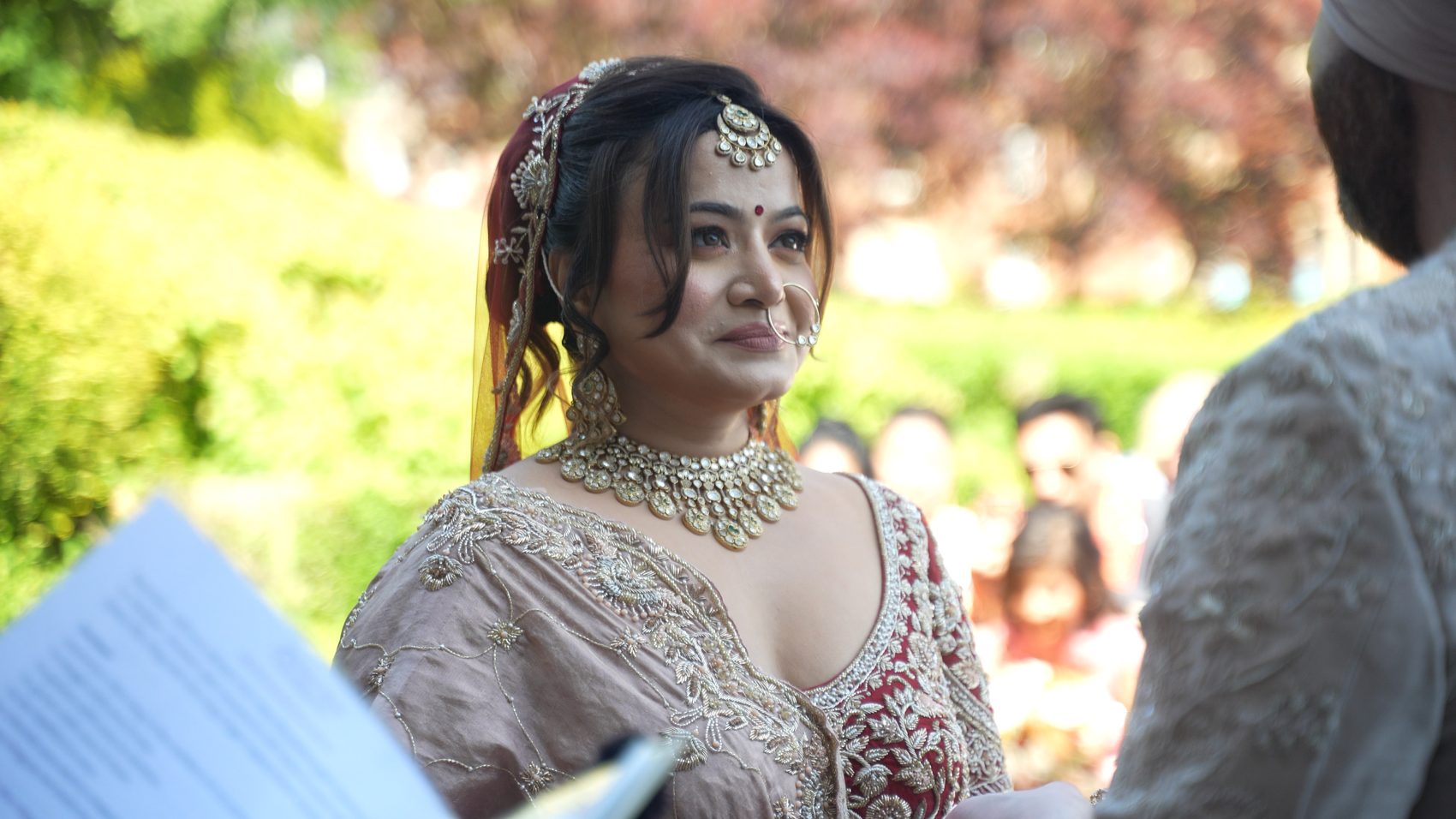
The quieter moments are the ones that matter most, and they never announce themselves. A parent watching from the side. Someone holding the stone a little longer before letting it go. A guest taking in a tradition they have never seen before. The couple catching each other’s eye in the middle of it all. They happen fast and then they’re gone.
You cannot ask for any of it again. You cannot redo a reaction, reset the feeling in a room, or ask the couple to walk the Laavan one more time because an angle got missed. That is the whole reason coverage matters, and not just for the headline moments but for the atmosphere around them and the small in-between bits that make a wedding film feel like it belongs to one specific couple.
Because with a fusion wedding, the story is never only at the front of the room. It’s in two traditions, two families, and every space in between.
Planning a fusion wedding?
If you’re planning a fusion wedding, a multi-faith day, or anything with two ceremonies, it’s worth thinking early about how much will be happening at once and what you’ll want to be able to relive afterwards. Check our live availability to see if your date is still open, and we’ll come back with honest guidance on whether your day needs a second videographer.